
The Essentials at a Glance
- Function: Ceramic protection tubes protect temperature sensors from the process environment. Insulating tubes guide and electrically insulate the conductors within the measuring system.
- Applications: Components for thermocouples, resistance thermometers (RTDs), and specialized applications in temperature measurement and control technology.
- Materials: RUBALIT® C 799, DIMULIT® C 610, and PORMULIT® C 530 — selected to meet temperature, atmosphere, and mechanical requirements.
- Temperature resistance: According to the material specifications, RUBALIT® C 799 is suitable for operating temperatures of up to 1,700 °C. Actual suitability depends on the specific operating conditions.

High temperatures, thermal cycling, and aggressive process media place particularly demanding requirements on the components used in industrial temperature measurement systems. Ceramic protection tubes and insulating tubes perform different functions: They protect the sensing elements or provide electrical insulation and guide the conductors.
CeramTec manufactures tubes and insulators from technical ceramics for thermocouples, resistance thermometers, and specialized measurement applications. Depending on the material, these components combine high temperature resistance with electrical insulation, mechanical strength, and resistance to chemical influences. The choice of material and geometry depends on the conditions of your application - in particular, the operating temperature, thermal cycling, process atmosphere, and installation conditions.
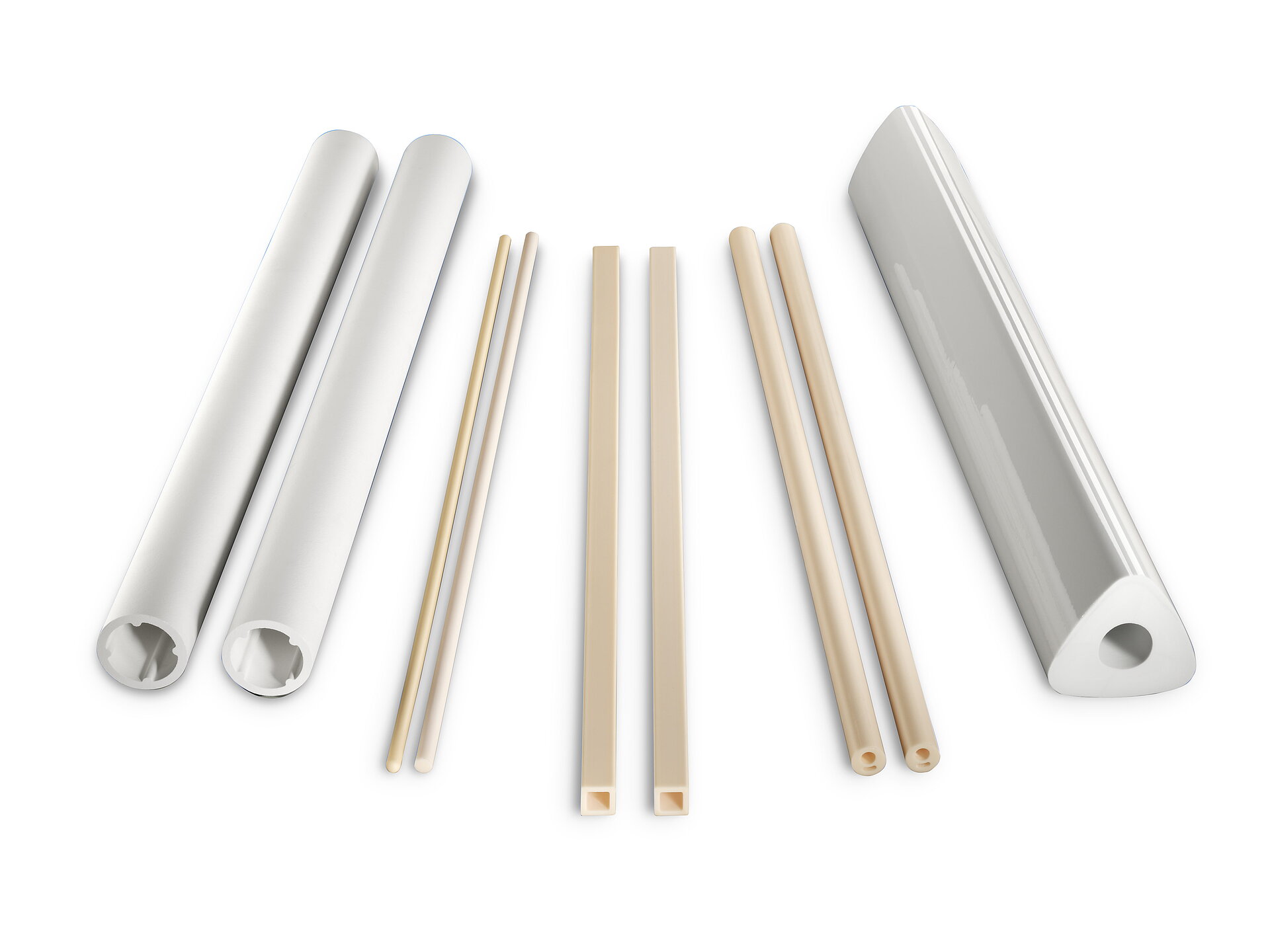
Overview of Ceramic Protection Tubes, Insulating Tubes, and RTD Insulators
Ceramic Protection Tubes for Temperature Sensors
Ceramic protection tubes enclose the temperature sensor and protect it from the surrounding process atmosphere. Closed-end designs form a protective sheath for the measuring system. Depending on the material and dimensions, CeramTec offers both closed-end and open-ended tubes. In addition to temperature, chemical exposure and the required level of protection are key factors in selecting the appropriate tube.
Ceramic Insulating Tubes and Multi-Bore Insulators for Thermocouples and RTDs
CeramTec offers ceramic insulating tubes and multi-bore insulators for housing and electrically insulating conductor wires in thermocouples and resistance thermometers (RTDs). The components guide the wires within the measuring system and ensure reliable electrical separation.
Available designs include round and oval versions as well as two-bore and four-bore insulators made of high-purity alumina ceramic. Other numbers of bores, special geometries, and customized dimensions are available on request. The required dimensions and tolerances are individually matched to the specific application. These are ceramic components for assembling measuring systems, not complete temperature sensors.
Which Ceramic Material Is Right for Your Application?
Different ceramic materials are available for protection tubes and insulating tubes. The decisive factor is not only the maximum temperature, but the combination of thermal, chemical, electrical, and mechanical stresses.
| Material | Material Base and Structure | Key Properties | Selection Guidance |
|---|---|---|---|
| RUBALIT® C 799 | High-purity, dense alumina ceramic | High mechanical strength, high electrical resistivity, and high corrosion resistance | For high thermal and chemical stresses; brochure specifies temperatures of up to 1,700 °C |
| DIMULIT® C 610 | Dense ceramic based on mullite and alumina | Good thermal shock resistance, low thermal expansion, and good mechanical strength | For temperature measurement applications; the brochure specifies operating temperatures below 1,400 °C |
| PORMULIT® C 530 | Porous ceramic based on alumina and silicon oxide | Particularly good thermal shock resistance and high electrical insulation | For applications with high temperature gradients; the temperature limit must be determined for the specific application |
Important: The temperature specifications are material-specific reference values and do not constitute blanket approvals for every component or measuring system. The process medium, atmosphere, thermal cycling, and mechanical loads must be taken into account when selecting the material.
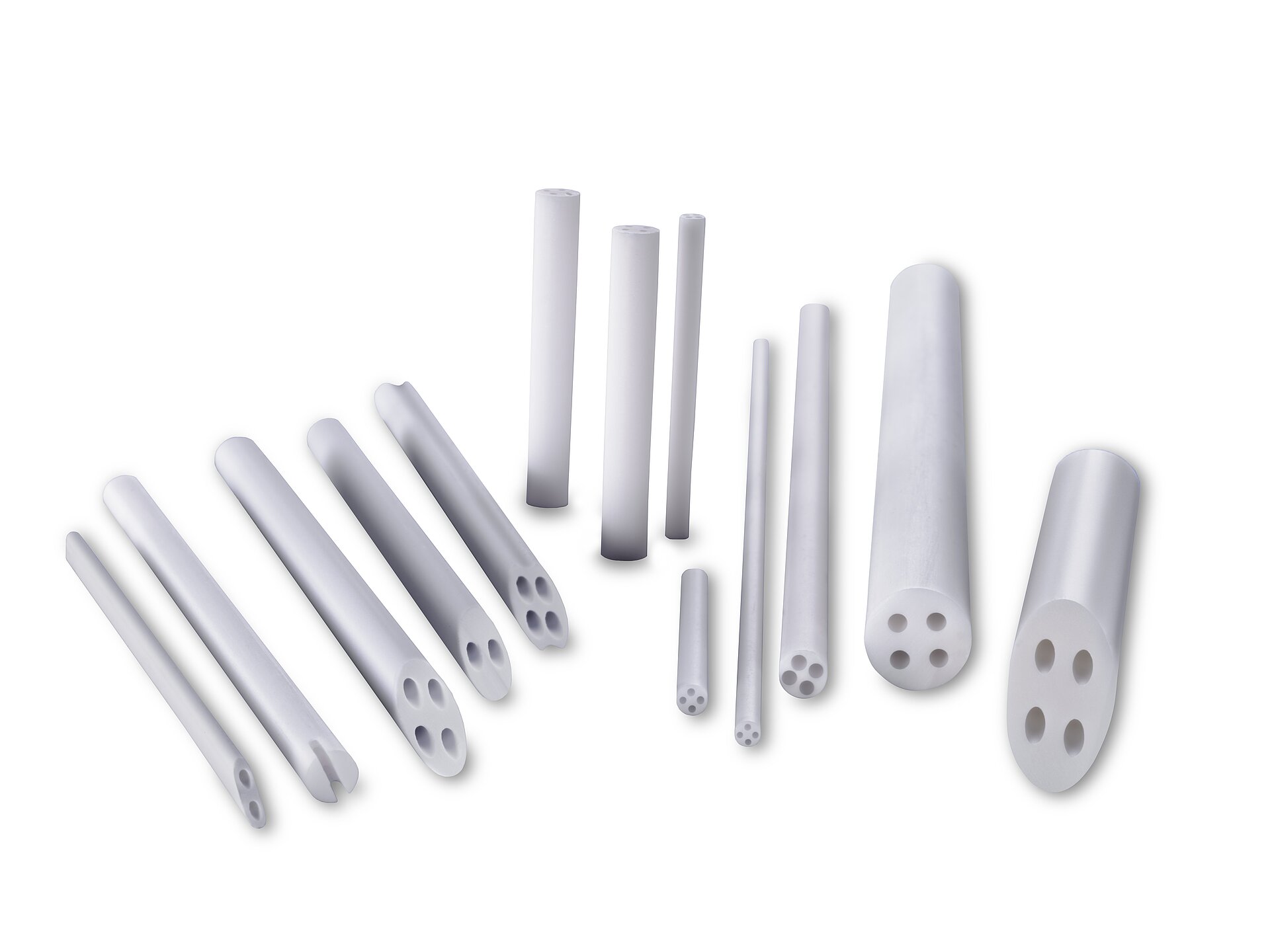
Longer lengths are available on request in addition to standard lengths of up to 2,200 mm. Not every combination of material, diameter, and length is available in every design. Dimensional tables and information on manufacturing tolerances can be found in the technical brochure.


FAQ - Ceramic Protection Tubes and Insulating Tubes
What is the difference between a protection tube and an insulating tube?
A protection tube encloses the temperature sensor and protects it from the process environment. An insulating tube guides and electrically insulates the conductors within the measuring system. Both components can be used together.
What temperatures are ceramic protection tubes suitable for?
The suitable operating temperature depends on the material and the operating conditions. For RUBALIT® C 799, CeramTec specifies operating temperatures of up to 1,700 °C. This value does not generally apply to other materials, all geometries, or the complete temperature measurement system.
Are all ceramic protection tubes gas-tight?
Gas-tightness should not be inferred solely from the term “ceramic protection tube.” The range of materials includes both dense and porous ceramics. If a defined level of gas-tightness is required, this must be explicitly agreed for the material, component, and operating conditions.